Tuesday, 11 November 2014

China's Single's Day:- November 11th, 2014 (11/11/2014)


I've found out from international news on the radio that today (11/11/14) is known as Single's Day in China. It is considered to be the Anti-Valentine's Day! Just imagine something like that... Celebrating your single-hood or as some would call it, your freedom. The origins of this day can be traced back to the early 1990's in China. Singles' Day which is otherwise known as Bachelors' Day got its name because the date of this day contains four 'ones' (the 11th day of the 11th month 11/11). This day was started by students of the Nanjing University located in the eastern part of China near Shanghai in 1993. The tradition has since spread and is now widely celebrated all over China and in a few other countries. Singles' Day had an even more special significance in 2011 and was considered to be the 'Singles' Day of the Century' because it was only on that day that the actual date consisted of six 'ones' (the 11th day of the 11th month of 2011... 11/11/11).


Map of China (Image taken from lonelyplanet.com)


On this day, singles usually go out and celebrate in restaurants as well as go shopping for themselves especially online. This is in fact a new phenomenon where online shopping in China on this day has said to have surpassed that of the Black Friday sale in the United States in 2013 earning up to 8.2 billion dollars in sales. Alibaba, a business mogul who owns the Alibaba Group of companies which is the largest e-commerce company in China has profited from a large percentage of these sales. His company has also been one of the companies heavily promoting this day. According to one site, Singles' Day is on its way to becoming the most profitable manufactured holiday in history. 

Sunday, 9 November 2014

The Basics in Mandarin


I thought I would do a written and a video blog outlining the basics in the Mandarin Chinese language. Some of these words and phrases I have mentioned before in previous blogs but there is nothing like repetition to help you learn a foreign language! I would start out with the greetings. As stated in previous blogs, "Ni Hao" means hello but the polite way to say hello is "Nin Hao". If you are greeting a group of people especially a large crowd or gathering, like Mark Zuckerberg did in his opening phrase, you should say "Daija Hao" which means hello everyone. To say goodbye means "Zaijian". 


  Mandarin Always Seems to be on My Mind!                                                                                                                Rehearsing Some Mandarin                                                          


Here are some other greetings you can say:-

Nice to Meet You:- Hen gaoxing renshi ni 

Good Morning:- Zaoshang Hao 

Good Afternoon:- Xiawu Hao

Good Evening:- Wangshang Hao 

Good Night:- Wan An


Here are some Everyday words/phrases in Mandarin:-

Yes:- Shi de

No- Meiyou 

Ice-Cream:- Bingqilin 


I will now go through some basic questions and answers in Mandarin.

How are You?:- Ni Hao Ma?

I am fine/good/very good:- Wo Hen Hao

What is the time?:- Shi shenme shihou?

The time is twelve noon:- Shijian shi zhongwu shi er dian 

Are you hungry:?:- Ni ele ma 

Yes, I am hungry:- Shi de wo ele 

What do you want?:- Ni xiang yao shen me 

I want to eat noodles:- Wo xiang chi miantiao 


Thursday, 6 November 2014

Tale of A Chinese National


I have been on an ongoing quest interviewing, filming and compiling short video footage of people I came into contact with who may know a few words or phrases in Mandarin. Unfortunately, I noticed that all Chinese people whom I've met seem to be camera shy. I have approached about seven Chinese folks to say a few words in Mandarin, however, although all of them admitted to knowing the language, none of them were willing to go on camera. A few of them didn't mind being taped once it was their voices alone being recorded but not their faces. This made me quite curious but I soon discovered the reason behind it.


There was one day I was returning home from class on a Saturday afternoon when I decided to stop at a Chinese restaurant to purchase some food. I was in my glee so to speak because Chinese food is one of my favourite types of food. Besides purchasing food, I decided to speak to the young lady who was attending to customers by taking their food orders. I found out that she could speak both Mandarin and Cantonese. After confirming that she knew Mandarin, I asked her if she was willing to speak on camera to which she declined. I wasn't really disappointed since I had been expecting her to decline being on camera. I had been to that Chinese restaurant several times before and one of the things I noticed was that this young lady was very friendly with all the customers and apparently remembered customers by their faces. She even knew some of them by name probably since they were regular customers at that restaurant.


After observing her open and friendly nature, I decided to do an impromptu short interview with her on the spot. She was also very friendly and open with me although she was a bit hesitant to answer a couple of the questions I had asked her. Of Course, she only agreed to do this interview anonymously which means that although she told me her first name, I would not even mention it out of respect for her wishes.  She reluctantly admitted to me that she was here in Trinidad illegally and is currently working there in the Chinese restaurant and also lives on the premises upstairs. The lady, who revealed that she is not married said that she came to this country for a better life and an opportunity to make money and send some home for her family back in China. She says that she has been in Trinidad for about five years now and that when she first came here she worked in a Chinese supermarket in Chaguanas. She said that life in China was rough for her and her family and that she and her brother came to this country seeking prosperity and to maybe one day get the opportunity to open a business together.


She said that she and all of her family is from the southern part of China and they grew up speaking Cantonese however she said that it was mandatory for everyone to learn the more formal form of the Chinese language which is Mandarin in school. So she knows both languages very well. Her family knew very little English so she had no choice but to start to learn English before she left China to come to Trinidad. I asked her if she misses her family and her country and she said every single day she thinks about them and does hope to one day return there if only to visit her family. During the conversation, I asked her if there was anything in particular she misses about China and she said that the Chinese festivals were really nice and pointed out one in particular. She specifically highlighted the Chinese Lantern festival that she and her family would celebrate every year from ever since she was a young girl.


Upon further research, I discovered that the Chinese Lantern festival was celebrated on the 15th day of the first lunar month of that year. Technically, this would be considered a celebration of the Chinese New Year. According to the Gregorian calendar, it usually occurs between February to March month. If you would remember from a previous blog, I had spoke about the difference between the Chinese lunar calendar and the other western type also known as the Gregorian calendar.

Find Out More Information About the Chinese Lantern Festival Here:-

Chinese Lantern Festival


A Chinese Temple decorated with Chinese Lanterns for the Festival


A Chinese Temple Lit up during the Chinese Lantern Festival


Chinese models walk the streets during the Chinese Lantern Festival


Tuesday, 4 November 2014

Celebrating Learning Mandarin with Rachel... Collaborative Blog #2


Celebrating Learning Mandarin is a collaborative blog with Rachel Thomas, the lady in the above photograph on the left. How we did this collaborative blog was really interesting. Rachel contacted me and requested to do an interview with me about my blog and my whole social media project, Let's Learn Mandarin. I happily agreed and was quite excited about this! I was so flattered when I realized that someone else wanted to highlight my project in their own. It really began to make me feel as though all my hard work was actually not only being recognized but appreciated as well. 

Rachel's project is entitled, "Celebrating Existence". It is about celebrating all the positive and wonderful things that life has to offer. She says that this world has way too many negativity and her aim is to remind as many people as possible that there is so many things to be positive about life. Her philosophy concerning her project is:-

1.      I’m too blessed to be fully stressed.
2.      Que Sera, Sera (Whatever Will Be, Will Be)
3.      Carpe diem! (Seize the day!)


When I asked Rachel why she decided to highlight my project, this was her exact words... I wanted to put her response word for word cause it was truly inspiring for me!

 "I chose to highlight your project because I like the focus of your project and an opportunity to learn a new language appeals to me. Your idea is one that I found refreshing, creative and also one that provides so many avenues to explore. Added to this it allows different ways to engage an audience. As an English and Spanish teacher often times I see students and many others building a barrier towards a new language. Your effort and the mediums as well as the platforms you have chosen are helping to bring “Let’s Learn Mandarin” more and more alive."


She admitted to me that she has learned a whole lot from my project especially about Chinese culture and also said that she even learned a few phrases in Mandarin and was quite pleased with the progress of my project. The most important thing I have learned from this collaborative interview blog is that it made me realize that I have a True passion for linguistics and this could definitely be a career option for me in the future.

Celebrating Existence & Let's Learn Mandarin Collaborative Interview:-


You want to Learn More about Rachel Thomas' project, Check Out her Social Media Links:-


Awesome Inventions Made by Chinese People!!!


All Photographs were taken from Business Insider.com


Hey Folks, As you already know, I am extremely fascinated by China, Chinese people including their main language, Mandarin. Well, you all also know that I share everything I happen to discover in my research of everything Chinese related. It so happens that this particular article fell into my lap, well, more like my page, my Facebook page. I have a few Facebook friends who post articles from well respected news sites such as Business Insider, Time and The Economist. The most recent article concerning ordinary Chinese people came from the Business Insider. I thought that this story was a Must Tell story because it is so intriguing to see the really out of this world inventions that these Chinese made so I simply had to immediately write a blog about it.


Ok, so this article is about 31 innovative, unique and somewhat crazy inventions made or which are currently still being worked on! The inventions are generally HUGE in size ranging from various types of robots, air crafts, water bicycles, homemade submarines and even miniature submarines! It is not that these inventions were never made before but they used the already existing idea or prototype for the product and modified it for a different purpose or possibly to market it to a different niche audience. This to me is what exemplifies ENTREPRENEURSHIP!!! These Chinese are Truly Great examples of the True Spirit of what an Entrepreneurship embodies!!!


Read The Full Article and See More Pictures of these Incredible Inventions here:-

Sunday, 2 November 2014

Celebrities Who Speak Mandarin!!!

Celebrities Who Speak Mandarin


I have compiled a list of several people including several well known celebrities who know how to speak my new favourite language, MANDARIN!!!! Whether it's a personal goal or a for just a couple of minutes or seconds for a scene in a movie or television show, this list of celebrities spoke Mandarin! I have also included a few short video clips of them speaking Mandarin. I do hope you enjoy it... 


#10 BRUCE WILLIS (Bruce Willis plays a retired Special Forces agent named John Malkovich in the movie, Red! He speaks one line of Mandarin in the movie however most critics were not impressed by this with even some saying that it was "fake Chinese" that he spoke.)


#9 JIM PARSONS (He spoke one line of Mandarin on the show while having a conversation with his neighbour, Penny (Kaley Cuco) on the sitcom, The Big Bang Theory. His character on the show is Sheldon Cooper.


#8 JUSTIN TIMBERLAKE (Justin spoke a few lines in Mandarin, Chinese in a Sony commercial a few years ago... I really tried to get a copy of it but couldn't get a copy of it for this blog)


#7 STEPHEN SEAGAL (Seagal played the role of Jack Cole in the movie, Glimmer Man when he spoke a few lines of Mandarin however it has been said that he is fluent in the language)


#6 LAWRENCE FISHBURNE (He played the  the role of the senior detective, Dr. Raymond Langston  in the show, CSI when he joined the cast in Season 9 after the departure of the main character, Gil Grissom played by William Peterson. He spoke fluently in Mandarin during a telephone conversation during an episode). 


#5 MIRA SORVINO (This actress has accomplished quite a lot in her career thus far. She was the winner of both an Academy and an Emmy Award and is known for her breakthrough film, Mighty Aphrodite (the movie she won the Academy Award for). She went to Harvard University and speaks French and Mandarin fluently. 


#4 CHRIS TUCKER (The well known comedian who is famous for his role in the Rush Hour trilogy alongside Jackie Chan spoke Mandarin several times during all three Rush Hour movies. He is one of my main influences in deciding to learn this fascinating language). 


#3 KEVIN RUDD (The former Australian Prime Minister who is impressively fluent in Mandarin spoke Mandarin in an interview below with Zhou Li of Australian Mandarin News on a YouTube video clip below). 


#2 SANDRA BULLOCK (This highly acclaimed actress who speaks fluently in both German and Mandarin amazed the audience  by saying a few lines in Mandarin at the Oscars some years ago. It was a bit confusing for some critics because she spoke in a German accent). 


#1 MARK ZUCKERBERG (Last but certainly not least, this billionaire and CEO of Facebook both shocked and awed many people around the world by speaking Mandarin in a Q & A segment for about 30 minutes! There were mixed reviews about his fluency in the language but I personally think he deserves an A for effort!) 


Hollywood's Guide to Speaking Chinese


Kevin Rudd's Interview with Zhou Li in Mandarin


Sandra Bullock Speaks Mandarin @ The Oscars


Mark Zuckerberg Speaks Mandarin in an Q & A Segment in China


Progress on Learning Mandarin


Ohhhh My Gosh!!! I am sooo thrilled to share my latest news with you! I FINALLY found someone on Facebook who knows how to speak Mandarin quite well. It is a woman named Jesse who is from Hong Kong. A couple of days ago, I randomly asked her to like my page and she said no problem which brought the likes on my page entitled, 'Let's Learn Mandarin' to 102 likes. YAY!!!! I am relieved that my page has finally crossed the 100 Likes milestone. She was very friendly and soon revealed to me that she spoke Mandarin, Chinese really well. I became really excited especially since she offered to help me learn the language!


A photograph of Jesse


She even mentioned that she heard about the Caribbean but has never been there. She said she would love to visit there one day because of the beautiful beaches and natural scenery...  Her exact words were, "Feichang piaoliang wanmei de daoyu" which means very beautiful and perfect islands. This was exactly how she described the Caribbean. 

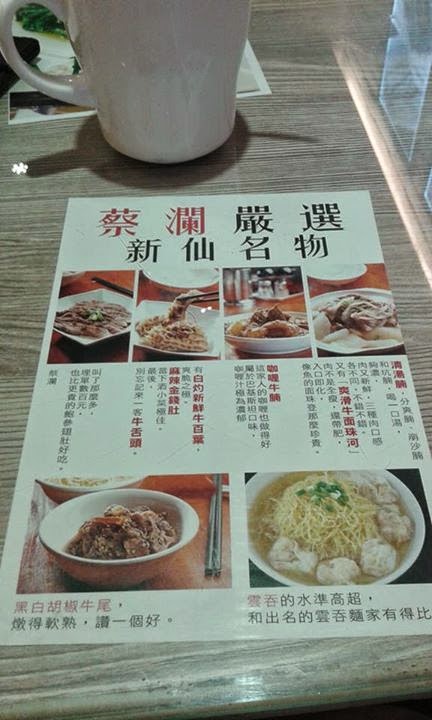
A picture of a menu at a restaurant in Hong Kong

I have met other people who speak Mandarin on other social networking sites like Busuu but they didn't know that much Mandarin and seemed to be a little busy. Sites like Busuu was still useful in learning the language especially the basics. If it's two things I've learned in my journey thus far is that when you're passionate about something, you tend to learn not just one but several new things every single day. The other really important thing I've learned is to "Yǒng bù fàngqì. Qízhōng, yǒu yìyuàn, yǒu bànfǎ" which means... never give up, where there's a will, there's a WAY!!! 

Saturday, 1 November 2014

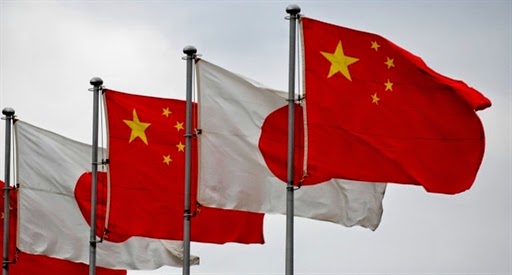
Chinese vs Japanese Culture


I've realized after doing some research on both Chinese and Japanese cultures why so many people including myself quite often tend to get them mixed up. There are a number of similarities between China and Japan because of the influence China had in the development of Japan. Their similarities include geographical, arts and culture, cuisine, religious beliefs and a strong sense of loyalty as well as strict work ethics. China and Japan are both located in eastern Asia. China is on the eastern part of the Asian continent near Mongolia, Russia and India while Japan is an island located in the Pacific Ocean to the east of the Asian continent. I will outline similarities and differences between the two countries.


Major Similarities between China and Japan

1) China and Japan have similar religions. One of the religions that is widely practiced in both countries is Buddhism. 
2) Both cultures reflect a strong sense of loyalty. In both countries, Chinese and Japanese tend to be loyal to their families, groups in society as well as the companies they work for. 

3) The two countries have adopted Confucian values. An example of a Confucian value is that the man is the head of the home with the woman playing a humble subservient kind of role and the eldest male is the natural heir to the family's wealth. 

4) Both China and Japan are notorious for having crime syndicates in their society. China has the Chinese mafia which is known as the Triad and Japan has the Japanese mafia known as the Yakuza.  

5) Both countries are found in the eastern part of Asia.

                                       6) A variety of the arts and culture in both China and Japan are quite similar. 

7) China and Japan are known for having call girls who are highly educated, sophisticated and properly trained in the knowledge and practice of various forms of the Arts. These women are referred to by different names. In China they are known as Courtesans and they are known as Geishas in Japan.


                                            Chinese Courtesan                                 Japanese Geisha


Major Differences between China and Japan


1) One of the biggest differences between China and Japan is that Japan was strongly influenced by the western side of the world while China was not. This is why Japan is considered to be far more developed and modernized than China.

2) In China, there is one written language which is Chinese and multiple spoken languages while in Japan it is the opposite with multiple written languages and one spoken language which is Japanese.

3) Most Chinese dishes are fried while Japanese dishes tend to be more on the raw side. For example, egg rolls are a popular dish in China which is fried while Japan is known for the delicacy called sushi which consists of raw fish.

4) China had a strong influence on Japan when it comes to martial arts however both styles of martial arts differ. The Chinese practice Kung Fu while the Japanese style is referred to as Bushido.

5) It is quite common to see people talking and laughing out loud as well as public displays of affection in China while in Japan it is frowned upon and often considered offensive and rude to do so.

6) This one really stood out to me and shocked me a bit. In China, they do not flush the toilet paper after using it, they throw it in a dustbin that is usually near the toilet while the Japanese flush their toilet paper similar to most of the western part of the world.

7) Although the both styles of dress may be similar, Chinese and Japanese have two different common styles of dress for women. In China women wear the qipao and in Japan the kimono.

8) Chinese names tend to be monosyllabic which means words that consist of only one syllable while Japanese names tend to be polysyllabic which are words that consists of many syllables usually four or more.

9) Japan is considered to be a warrior state while China is not. Being a warrior state simply means that all aspects of being a warrior is celebrated.

10) China has a President while Japan has a Prime Minister. The President of China is Xi Jinping and the Prime Minister of Japan is Shinzo Abe.

11) China has a high birth rate even though they have a one child policy per family while in Japan there is no such rule or policy. In fact, Japan has a one of the lowest birth rates in Asia.

12) The infrastructure in China seems to resemble walled cities while the designs in Japan tend to be palace style.


  City Wall in Xi'an, China     (Image on the Left)              

Himeji Castle, Japan   (Image on the Right)